
Where to shop
| Place | Best for | Cities |
|---|---|---|
| Takashimaya | Quality crafts, kimono, tea, a superb food hall | Kyoto (Shijo), Osaka (Namba), Tokyo (Nihonbashi) |
| Daimaru | Fashion, gifts, food hall | Kyoto, Osaka (Shinsaibashi, Umeda), Tokyo |
| Hankyu | Fashion and food, a landmark of Osaka | Osaka (Umeda) |
| Mitsukoshi | Japan’s oldest department store brand; crafts and gifts | Tokyo (Nihonbashi, Ginza) |
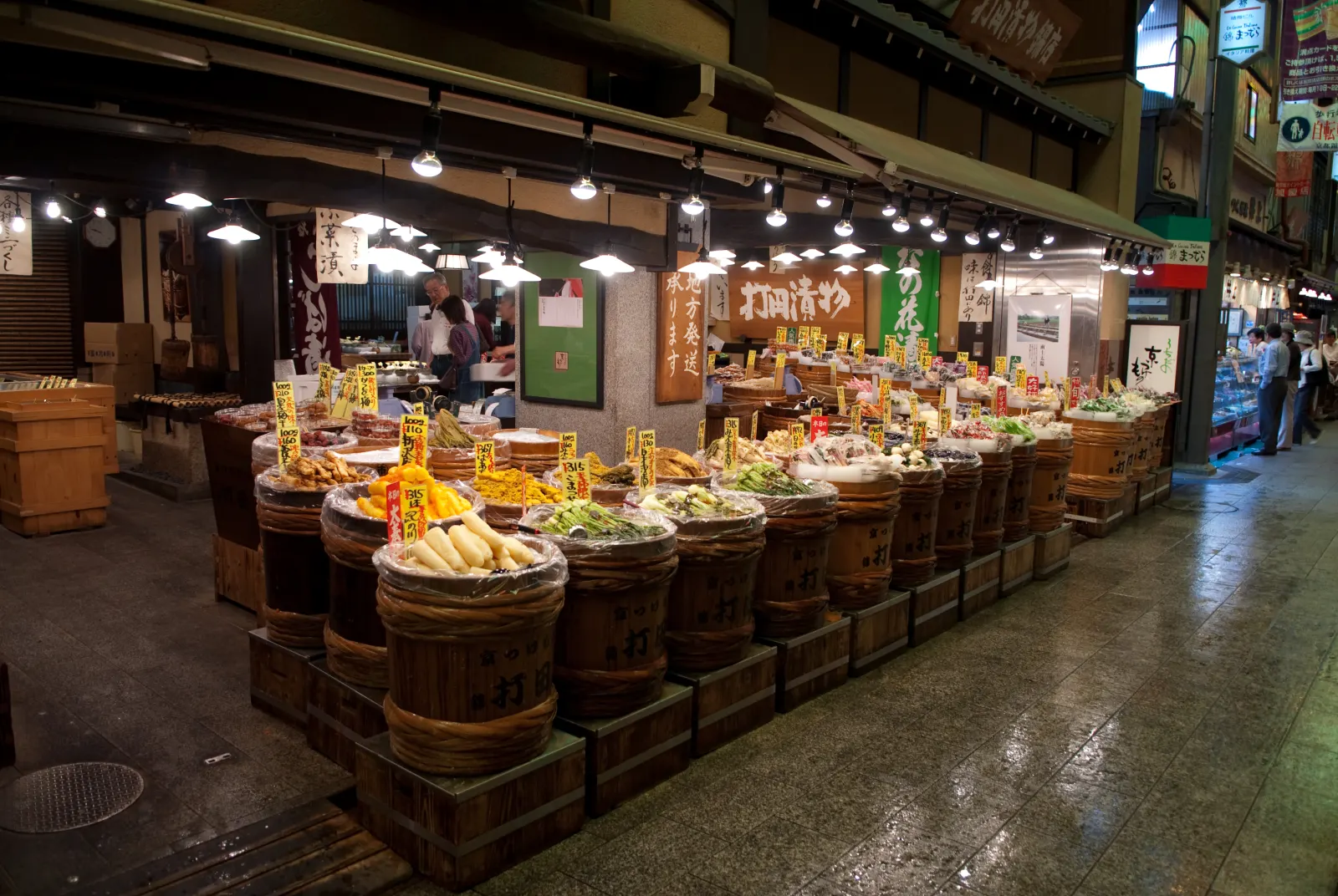
| Nishiki Market | Kitchen knives, tea, pickles, kitchen tools | Kyoto |
| Gojozaka and Kiyomizu lanes | Kiyomizu-yaki ceramics and crafts | Kyoto |
| Uji | Green tea and matcha from the source | Between Kyoto and Nara |
What to buy
- Kitchen knives. Kyoto’s Aritsugu, in Nishiki Market, has made blades since the 16th century and engraves your name on the knife. Sakai, south of Osaka, is another historic knife town.
- Ceramics. Kiyomizu-yaki along the lanes below Kiyomizu-dera, and pieces from all over Japan in department store craft floors.
- Green tea. Uji, south of Kyoto, has grown tea for centuries; matcha, sencha and gyokuro in beautiful tins make light, lasting gifts.
- Kimono and yukata. New and vintage kimono, cotton yukata for summer, obi belts and accessories. Vintage shops in Kyoto offer good value.
- Pearls. Japan’s cultured pearls, first developed in Mie prefecture, are sold in department stores with certificates of quality.
- Stationery and lacquerware. Washi paper, brushes, fans and lacquer boxes; easy to pack.
- Food gifts. Department store food halls (depachika) sell beautifully boxed sweets, rice crackers and tea, packed for travel.
Tax-free shopping
Visitors can shop tax-free on purchases of ¥5,000 or more (before tax) per store per day at participating shops; bring your passport, not a photocopy. Japan has been moving its tax-free system to a refund model from November 2026, in which tax is charged at the till and refunded after customs confirms the goods leave Japan with you. Ask each store how it handles tax-free sales, and keep tax-free purchases unopened and with you until departure.
- Always carry your passport when shopping; staff need to see the original.
- Department stores have tax-free counters, usually on one floor; Mario takes you straight there.
- Consumables such as tea and sweets may be sealed in special bags; do not open them in Japan.
Sizes
- Japanese clothing usually runs smaller than in the United States, the UK or Australia; try things on.
- Shoes are sized in centimeters (a US men’s 9 is about 27 cm).
- Kimono are adjusted when worn, so fit is more flexible than with Western clothes.
Shipping your purchases home
- From the store. Many department stores and craft shops ship abroad; ask at the counter.
- From the post office. Japan Post’s EMS is fast and trackable; boxes are sold at the counter. Mario helps you fill in the customs forms.
- Knives. Pack them in checked luggage, never in the cabin; shops wrap them safely.
- Fragile items. Shops wrap ceramics carefully; ask for extra padding for flights.
- Luggage forwarding. Send heavy bags of shopping to your next hotel or the airport so you are never carrying them.
A shopping day in Kyoto with Mario
- 09:30 Hotel lobby pick-up.
- 10:00 Nishiki Market: Aritsugu for a knife with your name engraved, tea and kitchen tools.
- 11:30 Takashimaya or Daimaru: craft floors, kimono, tax-free counter.
- 12:30 Lunch, reserved in Japanese.
- 14:00 The ceramic shops of Gojozaka and the lanes below Kiyomizu-dera.
- 16:00 Shipping or luggage forwarding arranged; back to your hotel.
Why shop with Mario
- He reads labels, certificates and care instructions in Japanese.
- He knows which shops are worth your time and which are tourist traps.
- He handles tax-free paperwork, shipping forms and luggage forwarding.
- He mixes shopping with the history and stories of each place.
Mario is based in Kansai, so Kyoto and Osaka shopping days carry no guide travel cost. Half day ¥45,600 · 4 h · for the whole private group; full day ¥69,600 · 8 h · for the whole private group.