Den Den Town, Osaka
Den Den Town grew up along Sakaisuji avenue in Nipponbashi, south of Namba, as Osaka’s electronics street. Today it mixes electronics stores and parts shops with anime, figure, card and retro game shops, and the parallel back street often called Ota Road. It is more compact and relaxed than Akihabara, and easy to combine with Namba, Dotonbori and Kuromon Market, all within walking distance.
- Electronics and parts: components, cables, tools and PC parts for builders.
- Retro games: several shops sell boxed and loose cartridges, consoles and accessories, with Japanese condition notes.
- Cards and figures: card shops for singles and sealed products, and figure shops new and used.
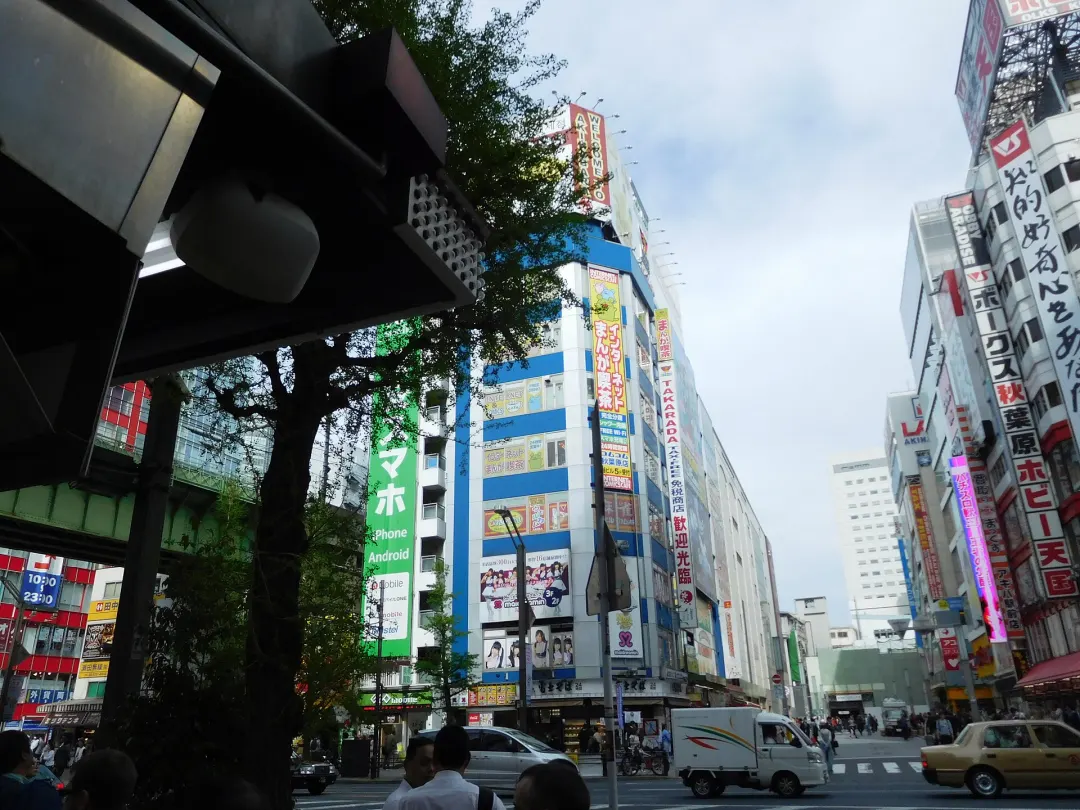
Akihabara, Tokyo
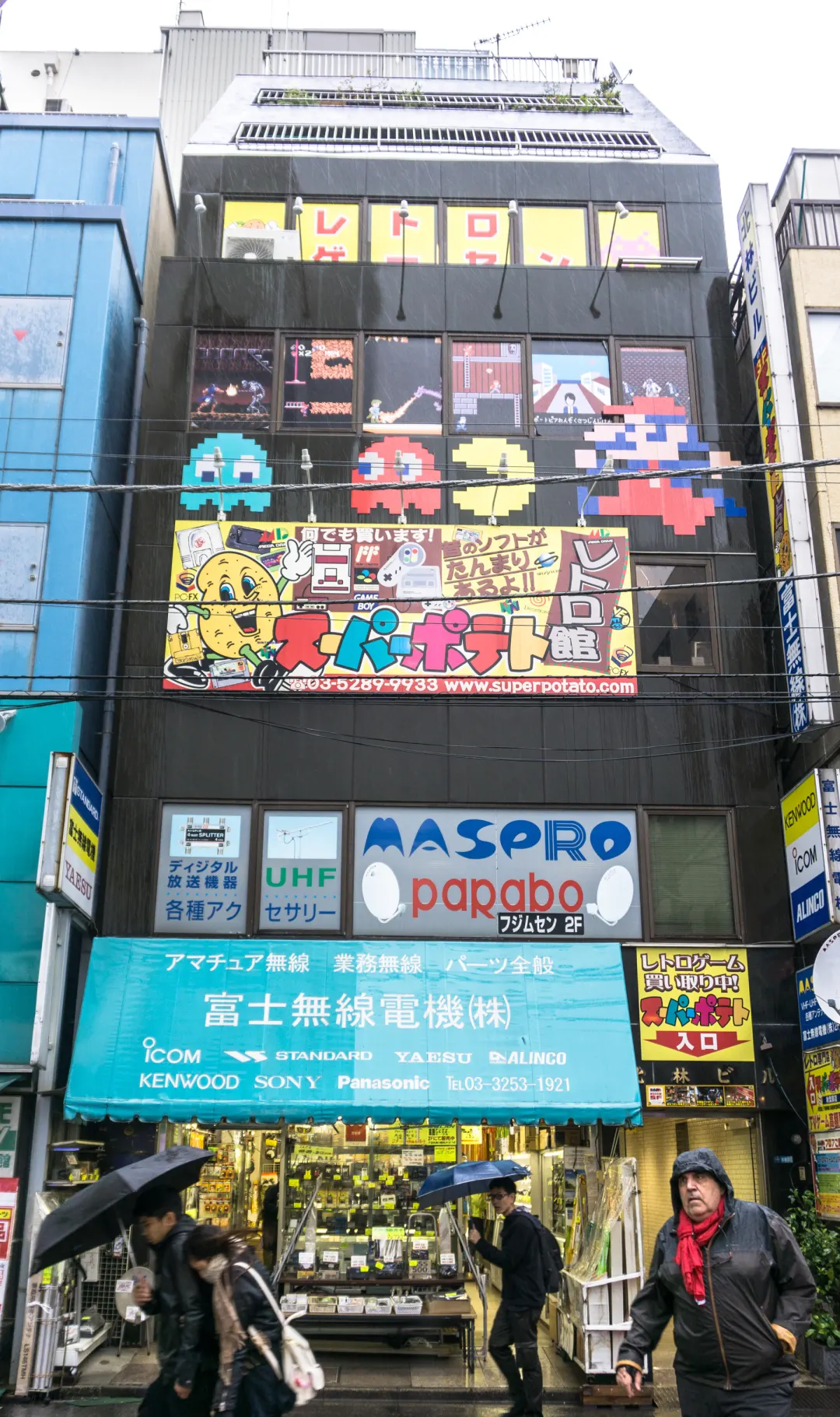
Akihabara still has its electronics roots: big stores for computers and cameras, and tiny stalls under the railway tracks selling parts and cables. For retro games, Super Potato is the best-known name, with shelves of cartridges and consoles from many generations and a floor of classic arcade cabinets. Other specialist shops on the side streets sell retro games and PC hardware. Go mid-morning; many shops open at 10:00 or 11:00.
Will it work at home? Voltage, plugs and regions
- Voltage: Japan uses 100 V, at 50 Hz in eastern Japan (Tokyo) and 60 Hz in western Japan (Osaka, Kyoto).
- Plugs: type A, two flat pins, the same shape as in the United States. Visitors from the UK, Australia and New Zealand need an adapter.
- Modern chargers for phones, laptops and camera batteries are usually rated 100–240 V and work worldwide; check the label.
- Older devices built for 100 V only often run on US 120 V outlets, but a step-down transformer is the safe choice; on 230–240 V (UK, Australia, New Zealand) a step-down transformer is essential.
| Item | What to check |
|---|---|
| Older consoles (8-bit to early 2000s) | Japanese models use NTSC-J video and 100 V power supplies; you may need a step-down transformer and a compatible display or converter |
| Cartridges | Some Japanese cartridges do not fit Western consoles without an adapter (for example Famicom versus NES) |
| Discs | Some older disc systems are region-locked; check your console before buying Japanese discs |
| Modern consoles | Many current systems are region-free for games, but check the specific model, warranty and account region |
| Laptops and PCs | Japanese keyboards have a different layout; operating systems usually let you change the language |
Buying used: condition notes
Retro game shops grade items carefully: boxed or loose, with or without manual, scratches, yellowing and whether the item has been tested. These notes are written in Japanese on the tag. Mario reads them for you and asks staff to test consoles where the shop allows it.
Tax-free shopping
Visitors can shop tax-free on purchases of ¥5,000 or more (before tax) per store per day at participating shops; bring your passport, not a photocopy. Japan has been moving its tax-free system to a refund model from November 2026, in which tax is charged at the till and refunded after customs confirms the goods leave Japan with you. Ask each store how it handles tax-free sales, and keep tax-free purchases unopened and with you until departure.
A sample day in Osaka
- 10:30 Hotel lobby pick-up; Kuromon Market for a late breakfast of grilled seafood and fruit.
- 11:30 Den Den Town: retro games, electronics parts, figures and card shops along Sakaisuji and the back streets.
- 13:30 Lunch in Namba.
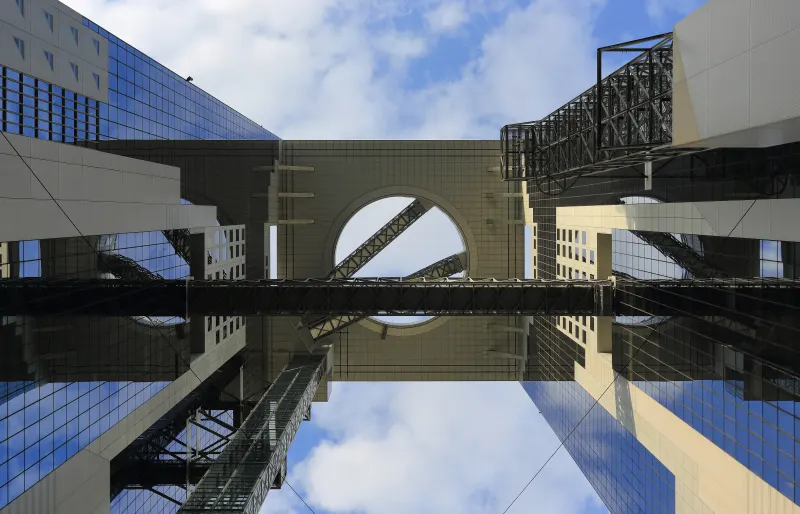
- 14:30 More shops, or Umeda’s large electronics stores for new hardware.
- 17:00 Dotonbori as the neon lights come on.
Packing your finds
- Bring bubble wrap or ask shops for extra packing for consoles.
- Keep cartridges and small electronics in hand luggage; lithium batteries must travel in the cabin.
- For large purchases, ask about shipping from the store or the post office.
Why go with Mario
Mario is an enthusiast of computers, electronics and games, as well as a professional private guide. He knows where the good shops are, reads the condition tags, and thinks through compatibility with you before you pay. He is based in Kansai, so a Den Den Town day carries no guide travel cost; for Akihabara, his train fare (and hotel if overnight) is added at cost. Half day ¥45,600, full day ¥69,600, per private party.